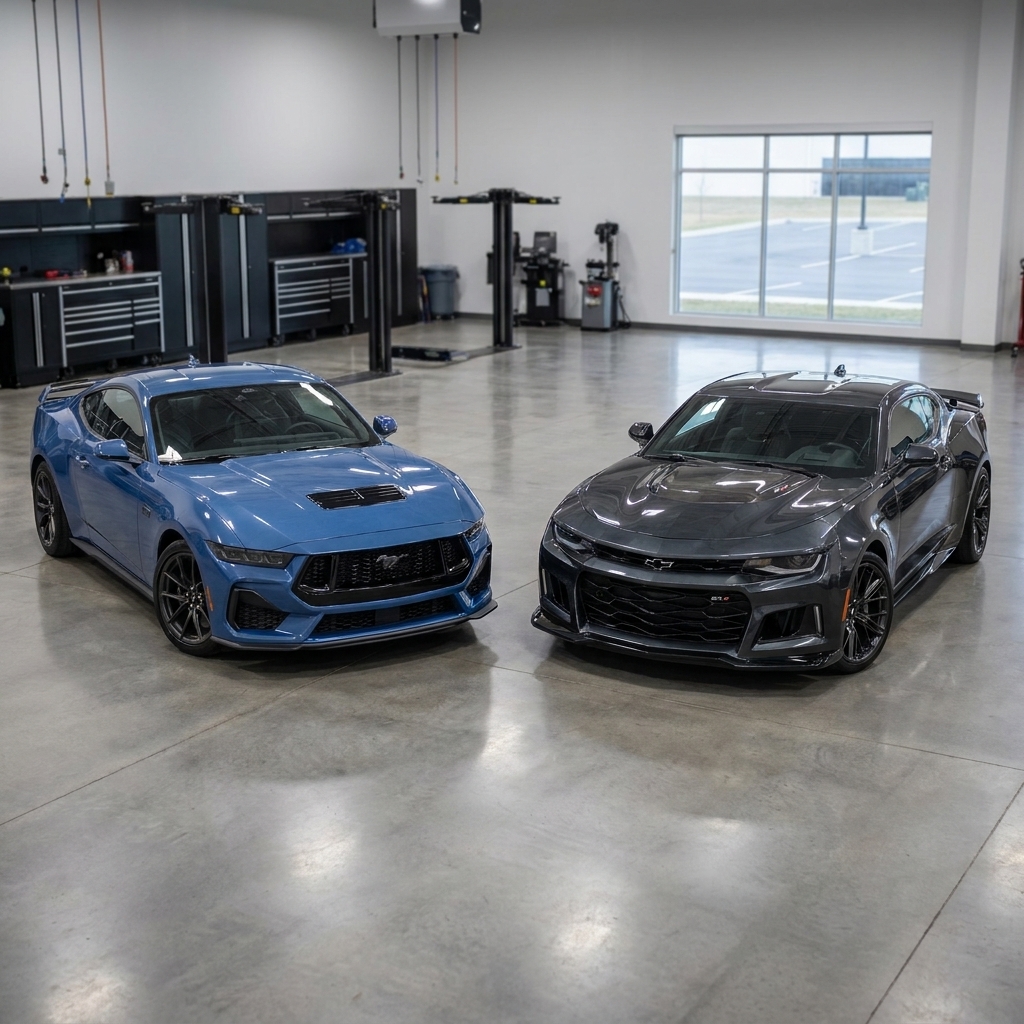
Mustang Dark Horse vs Camaro ZL1 comes down to two performance philosophies: a 5. 0L naturally aspirated V8 versus a supercharged 6. 2L V8.
Mustang Dark Horse vs Camaro ZL1: what really changes
The Dark Horse and the ZL1 aren’t chasing the same result in the same way. The Ford Mustang Dark Horse leans on immediate response, linear build, and naturally aspirated engagement. The Chevrolet Camaro ZL1 is built around the torque of a supercharger and the ability to pull hard from the midrange.
Translated to driving: one rewards building pace, the other delivers instant shove. It’s not a hierarchy. It’s an approach.
People searching “mustang dark horse vs camaro zl1” are usually looking for practical answers: how manageable it is on the street, how well it holds up on track without fading, how rewarding it is with a manual, and what it costs to run when you start pushing.
Three quick orientations help you avoid getting lost:
- Daily use and “clean” driving: you’ll feel the difference more in power delivery and visibility than in headline power numbers.
- Track use and repeatability: cooling, brakes, and tires matter as much as the engine.
- Manual and feel: gearing, throttle response, and corner-exit traction change the character.
The hard part isn’t comparing specs. It’s connecting them to what happens after three hard laps or on cold pavement.
What kind of comparison is “Mustang Dark Horse vs Camaro ZL1” in real life?
It’s a comparison between two high-performance versions of modern pony cars. Same general format, but different technical priorities. On one side is a 5.0L naturally aspirated V8 with a power curve that rewards revs and precision. On the other is a supercharged 6.2L V8 with earlier torque and a stricter demand for traction.
One numeric detail is enough to frame it without turning it into a contest: you’re looking at 5.0L vs 6.2L V8s and, in the ZL1’s case, forced induction. That alone is enough to anticipate differences in heat management, tire consumption, and driving style.
The typical confusion comes from three overlaps.
- Model years and packages: ZL1 isn’t automatically ZL1 1LE, and suspension/tire differences change behavior.
- Transmission: manual vs automatic isn’t just “preference.” It changes consistency, temperatures, and stress on clutch and brakes.
- Scenario: street, highway, back road, track, drag strip. Each context rewards something different.
A sensible comparison starts with a simple premise: there’s no “better” outside context. There’s a car that aligns more with how it’s used.
The criteria that matter more than advertised horsepower
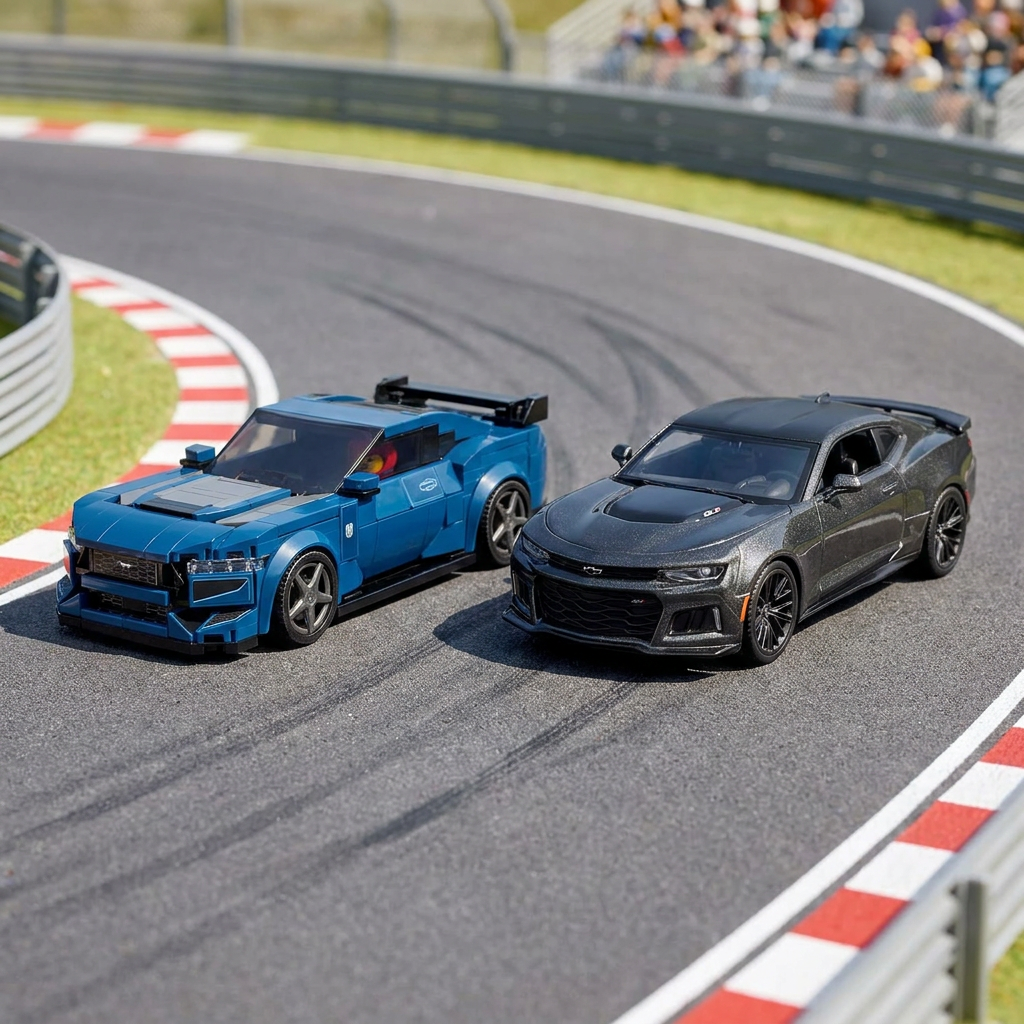
In a Dark Horse vs ZL1 discussion, horsepower grabs attention. But in real life, the biggest differences come from how the car puts power down, how consistent it stays under repeated effort, and how much confidence it gives you at the limit.
A useful criteria grid is this. It’s simple. It works.
- Power delivery and traction: a supercharger brings torque early. On the street that can mean easier wheelspin and more work for traction control and tires.
- Heat management: the track doesn’t forgive. After 10–15 hard minutes, intake air, oil, and transmission temps become “performance” as much as acceleration.
- Brakes and consumption: weight, end-of-straight speed, and tire compound define how often you replace pads and tires.
- Gearing and transmission: a manual demands more attention and rewards clean driving. An automatic makes lap times more repeatable and reduces mistakes, but changes the type of involvement.
- Suspension and tires: tire width and type affect traction and turn-in. Even a “stiffer” setup can become tiring on broken pavement.
- Life onboard: visibility, noise, infotainment quality, seats, and trunk matter more than most threads admit.
An often-underestimated point is repeatability. A car can feel thrilling in a single pull and less convincing when you ask for the same thing five times in a row. That’s where naturally aspirated vs supercharged becomes concrete, not theoretical.
For a practical reference without forcing unverified numbers: a typical amateur track session often runs 15–20 minutes. In that window, the real limits of cooling and brakes show up. On the street, throttle response, torque management, and comfort stand out instead.
Assumptions to state before debating (and common mistakes)
Any useful Dark Horse vs ZL1 discussion should state two or three assumptions. Without them, people end up talking about different cars.
- Exact trim: suspensions and track packages change tires, aero, and tuning. You feel those differences immediately.
- Use case: cold/dirty street pavement versus track driving with hot tires and correct pressures. Different worlds.
- Goal: engagement, lap times, straight-line acceleration, or overall balance.
Two mistakes show up repeatedly. First: taking one data point (horsepower or 0–60 mph) as a substitute for everything else. Second: ignoring running costs. A high-performance pony car can “cost” you mainly in tires and brakes when driven hard, even without mods.
One last method note for the whole article: this isn’t “good car” vs “bad car.” It’s two different interpretations of modern performance. The next steps are about details that change the experience, not rhetoric.
Manual or automatic: where the Dark Horse vs ZL1 experience really changes
In this matchup, the transmission isn’t a “taste” detail. It’s a character multiplier. With the naturally aspirated V8, gear choice and precision in keeping the engine in the right band matter more often. With the supercharged V8, earlier torque makes acceleration easier even with a less-than-perfect gear, but increases sensitivity to traction and throttle control.
The manual, in both cases, shifts the fun toward control. But the type of control is different. In the Dark Horse, driving rewards planning ahead: entry, apex, a touch of throttle, then full opening once the car is straight. In the ZL1, that same opening can come earlier in the sequence, but it demands more discipline with your right foot if the surface isn’t perfect.
Three practical effects almost always show up when you move from theory to the street:
- Consistency: an automatic tends to make acceleration more repeatable and reduces shift errors, especially when driving hard or tired.
- Torque management: with the ZL1, midrange shove can make it easier to exceed available traction. A manual can amplify that feeling if you open too early on corner exit.
- Engagement: the naturally aspirated engine often asks for more gear work. For many, that’s a feature. For others, in traffic or long transfers, it becomes an attention cost.
Component stress matters too. City driving, hill starts, and frequent restarts put pressure on the clutch and flywheel. In a car north of 1,700 kg (typical order of magnitude for the segment), inertia is real. You don’t need the exact curb weight to understand it—just think about how much energy gets managed in stop-and-go.
If you use the car beyond “toy” duty, the transmission becomes a lifestyle choice. For daily driving, an automatic reduces clutch wear and fatigue. For precision driving, a manual makes the naturally aspirated vs supercharged difference more obvious—for better and for less comfort.
Track and durability: when brakes, tires, and heat become the real comparison
On track, the question isn’t only “how fast,” but “how long it stays consistent.” A typical amateur session lasts 15–20 minutes, and in that time two recurring limits show up: temperature and consumption. With a supercharger, the ZL1 tends to add more thermal load to the intake-air cooling system. That can translate into less consistent performance if heat management isn’t aligned with the effort.
The Dark Horse’s naturally aspirated setup, by nature, ties output more to revs and often feels more “linear” in thermal progression. That doesn’t mean no heat. It means the peak demand can be different, and the driver can more easily modulate how long they stay at full load.
Brake and tire wear is what threads mention most, but rarely with a useful link to causes. It’s better to reason from mechanisms:
- End-of-straight speed: more speed means more energy to shed under braking. Pads and rotors work closer to their limits.
- Corner-exit torque: more torque earlier makes it easier to chew the rear shoulder if you open too soon.
- Weight and transfers: repeated heavy braking loads the front; you need tires and setup that can take it without degrading in a few laps.
A commonly ignored detail is the difference between one fast lap and a string of laps. A single lap tolerates compromises. A series doesn’t. If your goal is track days without “managing” the car every other lap, these become central: brake ducting, high-boiling-point brake fluid, correct tire pressures, and cooling that doesn’t saturate halfway through a session.
A practical tip without turning it into a shop checklist: before a track day, a serious check takes at least 30–45 minutes for pressures, lug torque, oil level, and pad inspection. It’s time well spent. It reduces variables and makes the Dark Horse vs ZL1 comparison cleaner, because you’re judging the car—not sloppy prep.
Interior and real-world use: visibility, comfort, and tech matter more than expected
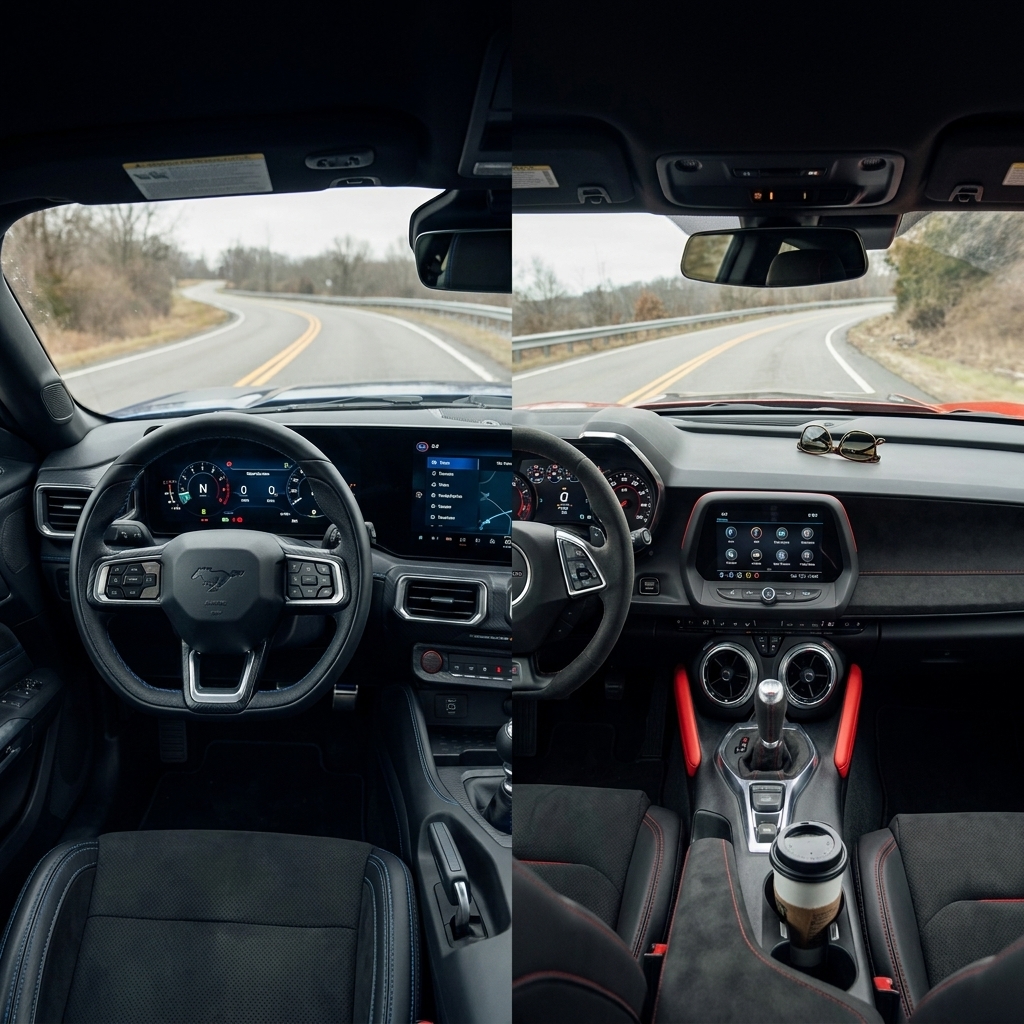
When people talk Dark Horse or ZL1, the cabin sounds secondary—until real use starts. Visibility, noise, and how easy the controls are to manage directly affect the experience, especially if you don’t drive only on Sunday mornings.
The Camaro’s layout tends to feel more cocooned. It’s engaging. But in cities and parking lots it can demand more attention for blind spots and tight sightlines. The Mustang, depending on seating position and adjustments, often feels more intuitive for judging space. It’s not absolute—it depends on posture, driver height, and how much you rely on cameras and sensors.
Comfort isn’t only soft vs stiff suspension. The frequency of impacts matters too. A precision-oriented setup can feel tiring on broken pavement because it transmits constant micro-hits. Over a 40–60 km drive, the difference between “sporty” and “stressful” often comes from that vibration pattern, not one big pothole.
In-cabin tech matters in a quieter but real way. Responsive infotainment, physical controls for frequently used functions, and the ability to quickly disable or tune driver assists change usability. In a high-performance car, being able to adjust drive modes and traction control quickly isn’t a gimmick—it’s operational safety.
If you do lots of transfers, include “boring” details in the comparison: headlight quality, highway noise, A/C effectiveness in summer, and seat support after two straight hours. They don’t show up in 0–60 mph, but they decide whether the car stays enjoyable when you’re not chasing performance.
Running costs and financial risk: where the money really goes
A big part of Dark Horse vs ZL1 is the “cost to have fun,” not MSRP. In spirited use, the main line items tend to be tires and brakes. Not for mysterious reasons: mass, speed, and torque turn rubber and pads into fast consumables when you raise the pace.
For a useful order of magnitude: a set of high-performance tires might last 5,000–15,000 km depending on driving style, alignment, and operating temperature. On track, the same tire can be used up in a few days if pressures are wrong or the setup chews the shoulder. You don’t need to fixate on one number—you need to understand the range is wide and usage-driven.
The same goes for brakes. Pads and brake fluid have very different life cycles on street versus track. Aggressive mountain driving can get closer to track demands than people expect because braking is repeated and cooling air isn’t always enough. A visual pad check every 2–3,000 km, if you drive hard often, prevents surprises and helps you plan costs.
Insurance and taxes (where applicable) are “non-negotiable” items tied to power, value, and driver profile. Here, the Dark Horse vs ZL1 comparison varies a lot by region and insurance history. The practical point is simple: before falling in love with an idea, get a real quote using a simulated plate or equivalent data—not a generic estimate.
Finally, there’s depreciation and resale. Editions, packages, and transmission choice can shift used-market demand. Treat this carefully because it depends on timing and location. But one rule holds: very extreme configurations often have a smaller audience, which can lengthen selling time even if the car is desirable.
Use-case scenarios: where the choice flips
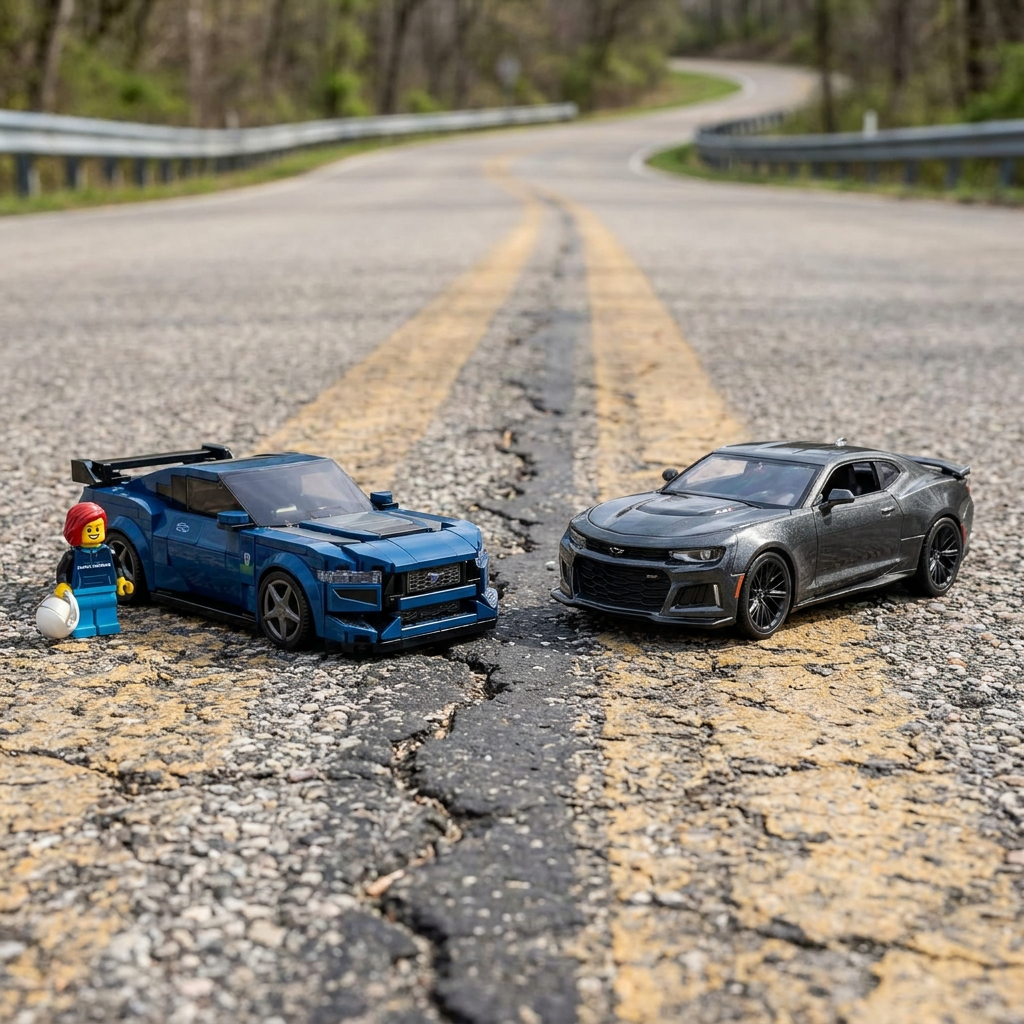
In Dark Horse vs ZL1, the useful question isn’t “how fast.” It’s “where do you actually want to use a 400+ kW pony car?” On open roads with imperfect pavement, the most concrete difference is how much confidence you can keep when you roll into the throttle in second or third. The Dark Horse tends to reward building speed progressively, because the naturally aspirated engine encourages clean driving and a more gradual load on the rear tires. The ZL1, with forced induction, can feel more demanding when grip varies, because torque arrives earlier and immediately tests tires and self-control.
At the drag strip or in straight-line pulls, the needle moves toward repeating strong launches without turning it into a lottery of wheelspin and corrections. Here, “boring” details matter: tire temperature, track prep, and how much setup work you accept between runs. On track, the choice shifts again: you don’t need a car that does one memorable lap—you need one that stays readable and consistent under repeated effort. If your goal is learning and improving, a platform that communicates limit and traction clearly often helps more than one that hits hard but demands constant micro-management.
One point that applies to both: if real use is 90% traffic, highway, and parking lots, the “right” car is the one that charges you less fatigue every day. It’s a harsh filter. It works.
When this choice feels natural—and when it becomes frustrating
It makes sense to look at the Mustang Dark Horse and Camaro ZL1 if your use includes active driving at least a few times a month: back roads, mountain passes, a track event, or simply wanting a V8 with real character. Your personal tolerance for fuel and consumables matters too. If you accept tires and brakes as part of the game—not an accident—you’ll tend to enjoy either car more.
It becomes a tiring choice if the car must be “always easy” in every condition: frequent rain, cold pavement, short stop-and-go trips, and very little mental bandwidth for traction management. In that context, available power isn’t automatically a benefit. It can turn into background noise and costs without a real return in driving enjoyment.
A quick synthesis, without forcing a winner
To make the Dark Horse vs ZL1 comparison easier to read, it helps to pin down three situations and connect them to the technical logic—not just spec-sheet numbers.
| Scenario | Option That Tends To Fit | Practical Reason |
|---|---|---|
| Mixed roads, clean rhythm, preference for progression | Mustang Dark Horse | The naturally aspirated setup encourages building speed and modulating throttle more precisely |
| Straights, quick passes, immediate midrange shove | Camaro ZL1 | Forced induction brings torque earlier, with a stricter demand for traction |
| Track days focused on learning and consistency | It depends on setup, tires, and preparation | Repeatability, temperatures, and brakes make the difference, not the engine alone |
Two notes prevent misunderstandings. First: “tends to fit” doesn’t mean the other option can’t work—it means it asks for more compromises or more attention in that scenario. Second: in the real market, the configuration you choose (packages, tires, transmission) can shift the character more than people admit. It’s worth thinking about the exact version, not the name in the abstract.
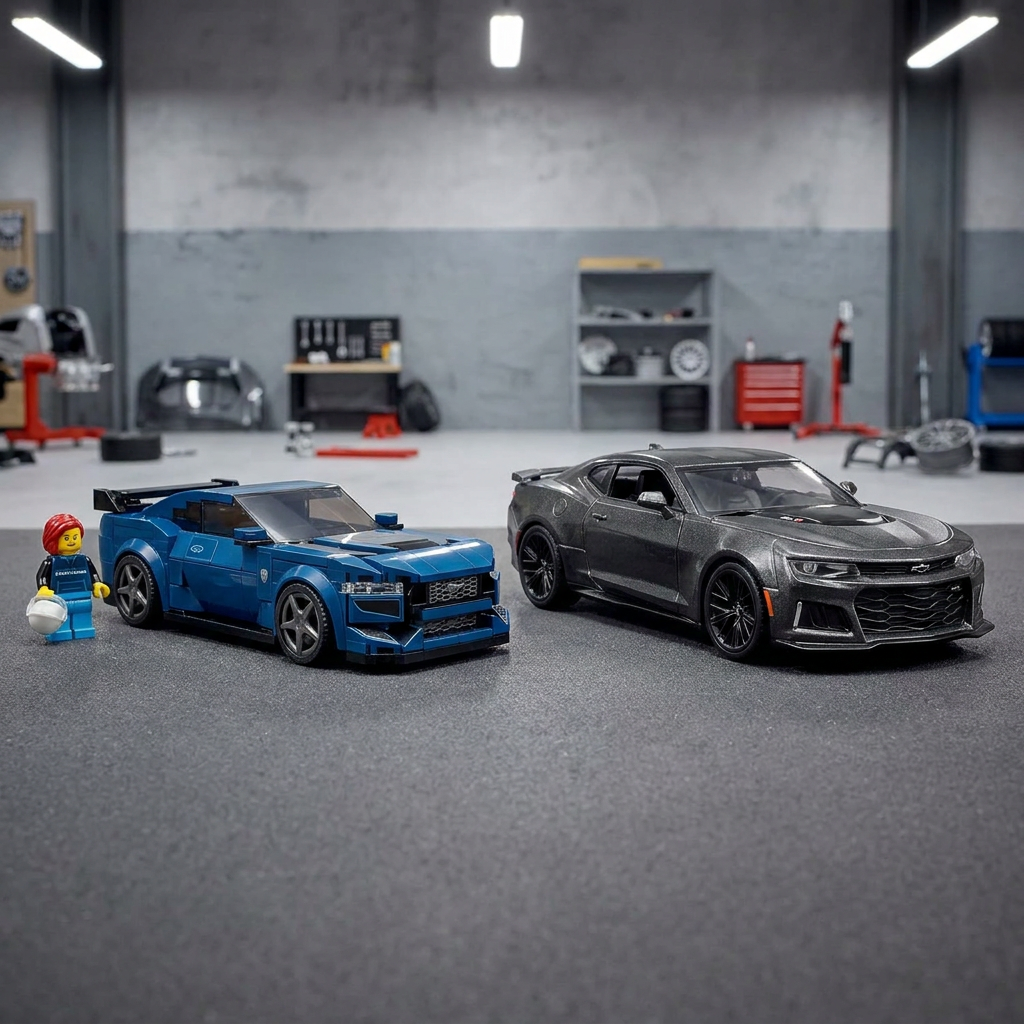
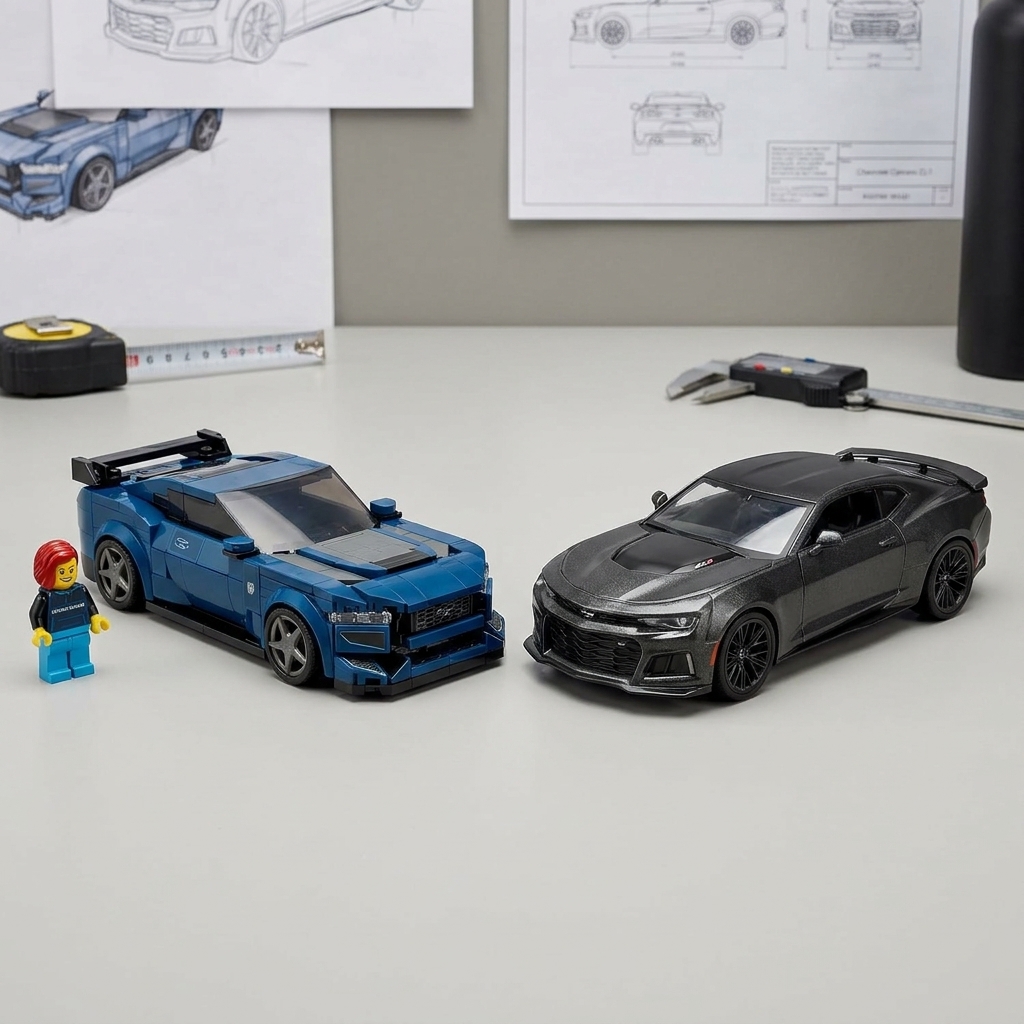
If you want a concrete way to visualize proportions and details without confusing them with real driving, scale and collectible models can help. For example LEGO Speed Champions Ford Mustang Dark Horse 76920 and Maisto 1:24 2017 Chevrolet Camaro ZL1 show the styling differences clearly.
A clear editorial stance without turning it into a ranking: if your stated goal is to feel like a “driver” more often than a “passenger of torque,” naturally aspirated power tends to create a more continuous dialogue. If your goal is full shove with less dependence on revs, forced induction is closer to that idea. Those two goals aren’t the same.
Frequently asked questions
In Mustang Dark Horse vs Camaro ZL1, what matters most for street driving?
Power delivery and traction matter more than headline power figures. On real pavement, throttle modulation and a readable limit make the difference.
Why do many online comparisons sound like they’re talking about different cars?
They often mix model years, packages, and transmissions. Change tires, suspension, or trim and you get behavior that’s no longer comparable “by name.”
Does “Mustang Dark Horse vs Camaro LT1” change the logic of the choice?
Yes, because the performance level and hardware involved change. The question becomes less “managing extreme torque” and more “overall balance between performance and simplicity.”
What’s the most common mistake when choosing between these two cars?
Reducing everything to one number, like acceleration or horsepower. Long-term satisfaction depends more on consistency, running costs, and fit to your real roads.
Three takeaways that still hold
Mustang Dark Horse and Camaro ZL1 reflect two different ways to chase performance: naturally aspirated versus supercharged.
Context decides: dirty roads, repeated track laps, or straight-line runs completely change what feels “easy” and what becomes “expensive.”
In Dark Horse vs ZL1, the exact trim and your real use matter more than any abstract debate. For track-day prep and safety basics, see NHTSA vehicle safety guidance.