
Mach 1 vs GT350R comes down to character: the 5. 0L Coyote is torquey and street-friendly, while the 5. 2L Voodoo is high-revving and track-first.
Both cars sit in the same Ford Mustang orbit, and both can be used on the street. But they were built around different priorities. Mach 1 is a "bridge" model that borrows proven hardware and aims for broad usability. Shelby GT350R is an uncompromising variant that leans hard into response, sound, and lap-to-lap capability.
- Start with usage: commuting and mixed driving versus frequent track days and heat management.
- Expect different power delivery: low-end pull versus high-rpm urgency.
- Budget for different upkeep: tires, brakes, and inspection depth change with track intensity.
How to think about Mach 1 vs GT350R
Pick the frame before the details. This comparison isn’t a simple "same job, different price" situation. Mach 1 and GT350R overlap in performance intent, yet they solve it with different engineering choices. That changes how they feel back-to-back and what they demand from an owner.
Mach 1 centers on the 5.0L Coyote V8 and a parts-bin approach that mixes GT, Bullitt, and Shelby-adjacent components into a package that’s easy to live with. It’s meant to be driven often. GT350R centers on the 5.2L Voodoo, a flat-plane-crank engine built for response and rpm, paired with a chassis and aero package that assumes high load and high temperature.
Numbers matter, but context matters more. A 0–60 time doesn’t tell anyone how the car behaves after 15 minutes of hard lapping, or how it feels in third gear on a bumpy two-lane. Those are the moments that make owners either keep the car for years or flip it fast.
For clarity, the "R" badge is the key. Shelby GT350 and Shelby GT350R are related, but the R is the more track-tilted spec. Lighter focus. More aggressive tires and aero. Fewer compromises.
Quick answer: who each car tends to suit
For most street miles, Mach 1 tends to fit drivers who want a fast Mustang that stays friendly in traffic, heat, and maintenance routines. GT350R fits drivers who prioritize steering response, high-rpm engagement, and repeated track use, and who accept a narrower comfort band.
Mach 1’s strengths show up in ordinary driving. The Coyote’s torque curve feels familiar and usable, and the car doesn’t require constant attention to stay happy. GT350R’s strengths show up when the car is worked. The Voodoo rewards revs, and the chassis is tuned to stay composed at higher speeds and higher loads.
Neither approach is "right." They’re different definitions of the same idea: a serious Mustang that can handle hard driving.
Why they feel so different: Coyote vs Voodoo and the rest of the recipe
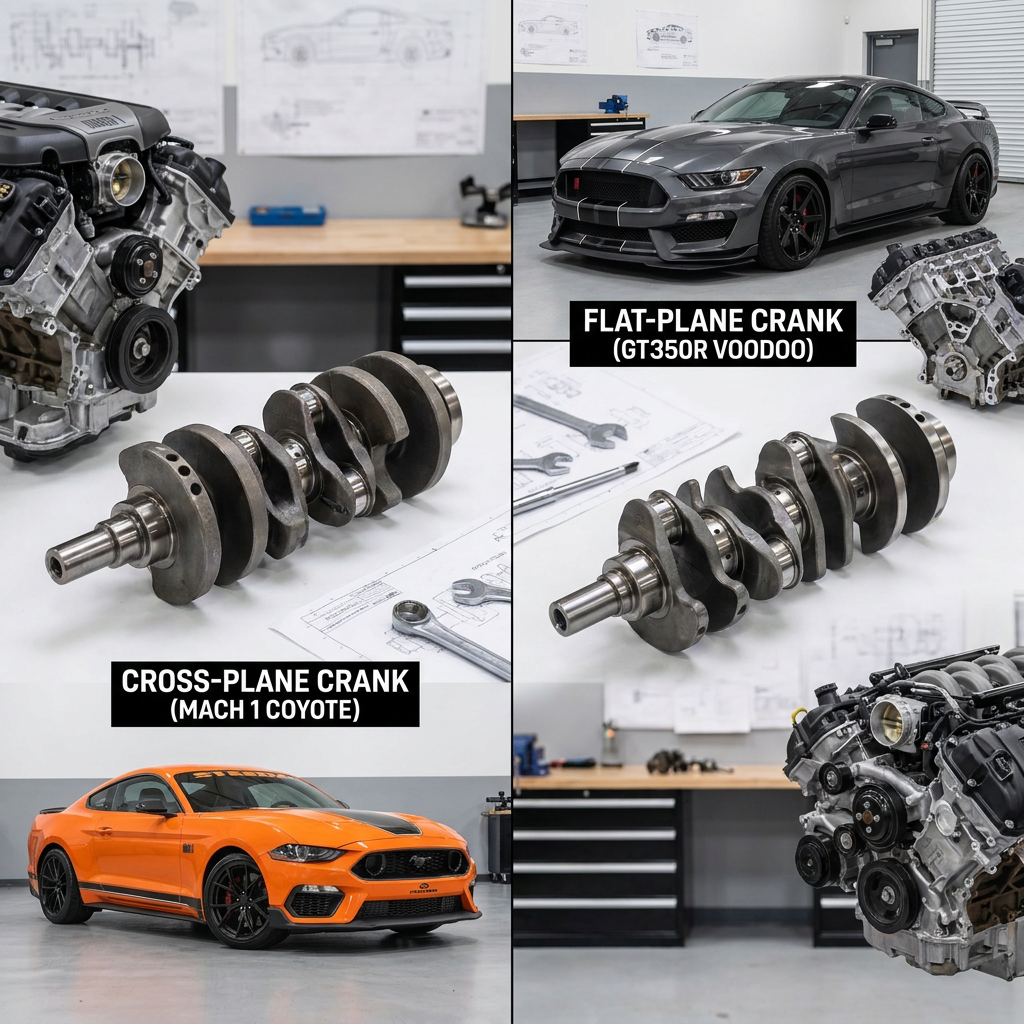
Most of the driving character comes from one mechanical choice: cross-plane crank versus flat-plane crank. Mach 1 uses the 5.0L Coyote, a cross-plane V8 that builds speed with a broad, accessible torque band. It feels strong without needing big rpm. That changes daily driving. Short shifts still work. Rolling acceleration feels effortless.
GT350R’s 5.2L Voodoo is a flat-plane V8 that leans into response and a rising, urgent pull as the tach climbs. It’s an engine that’s built to be worked, and it tends to feel most "right" when you’re using more of the rev range.
Sound is part of it, but not the whole story. Flat-plane engines tend to transmit a different vibration signature through the car. Some drivers read that as "alive." Others read it as "busy." Either reaction is reasonable. The point is that it’s a built-in trait, not a minor tuning difference.
Gearing and transmission choice amplify the gap. Mach 1 can be found with modern automatic behavior or a manual that suits mixed use. GT350R’s calibration assumes a driver who wants to be involved every minute. That involvement is the appeal for many owners. It can also be tiring in stop-and-go use.
Cooling and heat management sit in the background of every serious Mustang discussion. Track driving is a heat problem before it’s a power problem. The GT350R package was designed around that reality, and Mach 1 leans on a more broadly proven setup. Both can handle track days, but their margin and the owner’s prep expectations differ.
Early context that prevents bad comparisons
A clean Mach 1 vs GT350R comparison avoids two traps: treating "horsepower" as the only axis, and ignoring how the cars behave after repeated hard use.
- Street pace hides differences. Track pace exposes them.
- Engine character changes driver workload. That’s not a spec-sheet item.
- Ownership risk is shaped by inspection quality and maintenance history, not badges.
The comparison criteria that matter before any spec talk
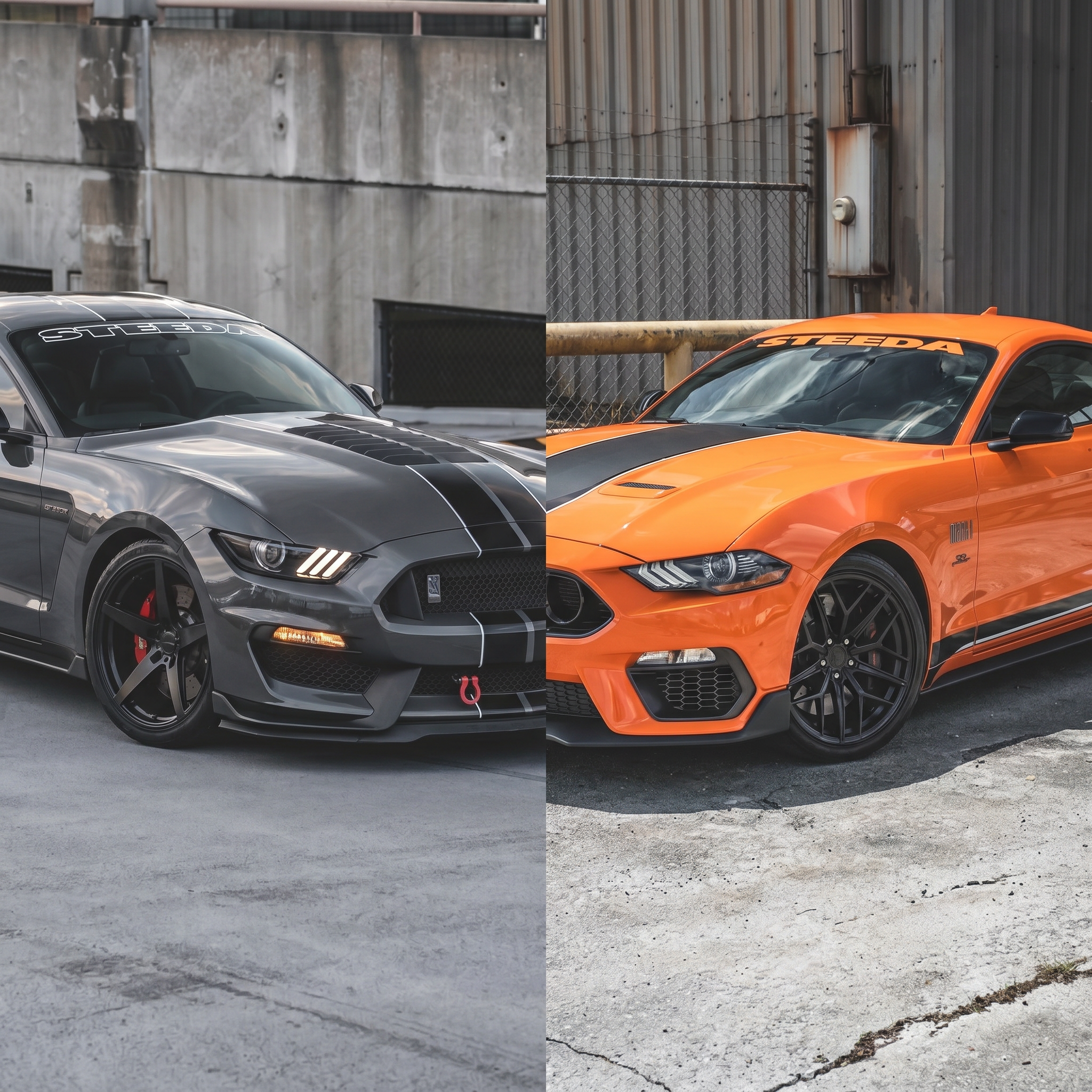
Forum debates often spiral into isolated facts: a tire model, a brake rotor size, a lap time from one day in perfect weather. Useful, but incomplete. A better way to compare Mach 1 and GT350R is to set criteria that map to real ownership decisions, then evaluate each car against those criteria across street and track contexts.
Power delivery and drivability comes first. Not peak output. The question is how easy it is to access performance in normal conditions. Mach 1 tends to feel strong without effort. GT350R tends to reward a driver who keeps it singing. That difference affects passing, short on-ramps, and how "fast" the car feels at legal speeds.
Heat tolerance comes next. Track cars live and die by cooling headroom. Oil temperature, differential temperature, brake fluid, tire temperatures. A car that feels identical for two laps can feel very different after ten. This is where track-focused packages earn their reputation.
Chassis behavior on imperfect roads matters more than skidpad numbers. Compliance, damping philosophy, and tire choice shape confidence on broken pavement. The GT350R’s tire and suspension intent can feel sharp and immediate. That same sharpness can feel nervous on rough surfaces if the driver isn’t expecting it.
Reliability risk and inspection depth should be treated as a separate category from "maintenance cost." A car can be expensive to run and still predictable. Another can be cheaper day-to-day but carry a bigger downside if a known issue appears. Buyers who skip a pre-purchase inspection often learn this the hard way.
Consumables decide track budgets. Tires and brakes are not abstract. A track-oriented setup can burn through a set of tires quickly, and aggressive pads plus heavy braking can chew rotors. Any comparison that ignores consumables isn’t an ownership comparison.
Value behavior matters because these cars sit in a collector-adjacent space. A GT350R with clean history can behave differently in the market than a Mach 1, and both behave differently than a regular Mustang GT. Market behavior shifts with mileage, modifications, and documentation.
These criteria don’t produce a single "winner." They produce a match. That’s the only useful result for a buyer trying to avoid regret.
Chassis, suspension, and road feel: where the difference shows up
In real use, the biggest difference between Mach 1 and GT350R isn’t just power. It shows up when the pavement isn’t perfect and when you ask for precision again and again. Setup matters here: springs, damping, geometry, tires, and perceived rigidity.
Mach 1 tends to fit better with mixed driving. Its calibration aims for a middle ground between control and tolerance. On rougher roads, that margin can translate into more confidence at speed without feeling like you’re constantly managing hop or nervousness. It’s not soft. But it’s often less demanding about surface quality.
GT350R, by design, lives on immediacy. Steering and support tend to feel more direct when the tire is in its working window. There’s a cost. On broken surfaces or expansion joints, the car can transmit more information than some drivers want for daily use. That isn’t a flaw. It matches a response-first approach.
Tires set the tone. A compound and casing built for load and temperature can deliver high grip in fast driving, but it can also increase noise, tramlining, and wear if you do lots of short trips. When Mach 1 runs less extreme tires, the package tends to forgive more. With GT350R, the chassis often wants the tire "on song" to show its best side.
Ride height and approach angle matter too. A lower setup or more exposed aero can punish steep driveways and speed bumps. It’s not glamorous. It’s the kind of daily friction that decides whether the car gets used often or saved for specific days.
Brakes, wheels, and consumables: the hidden cost of pace
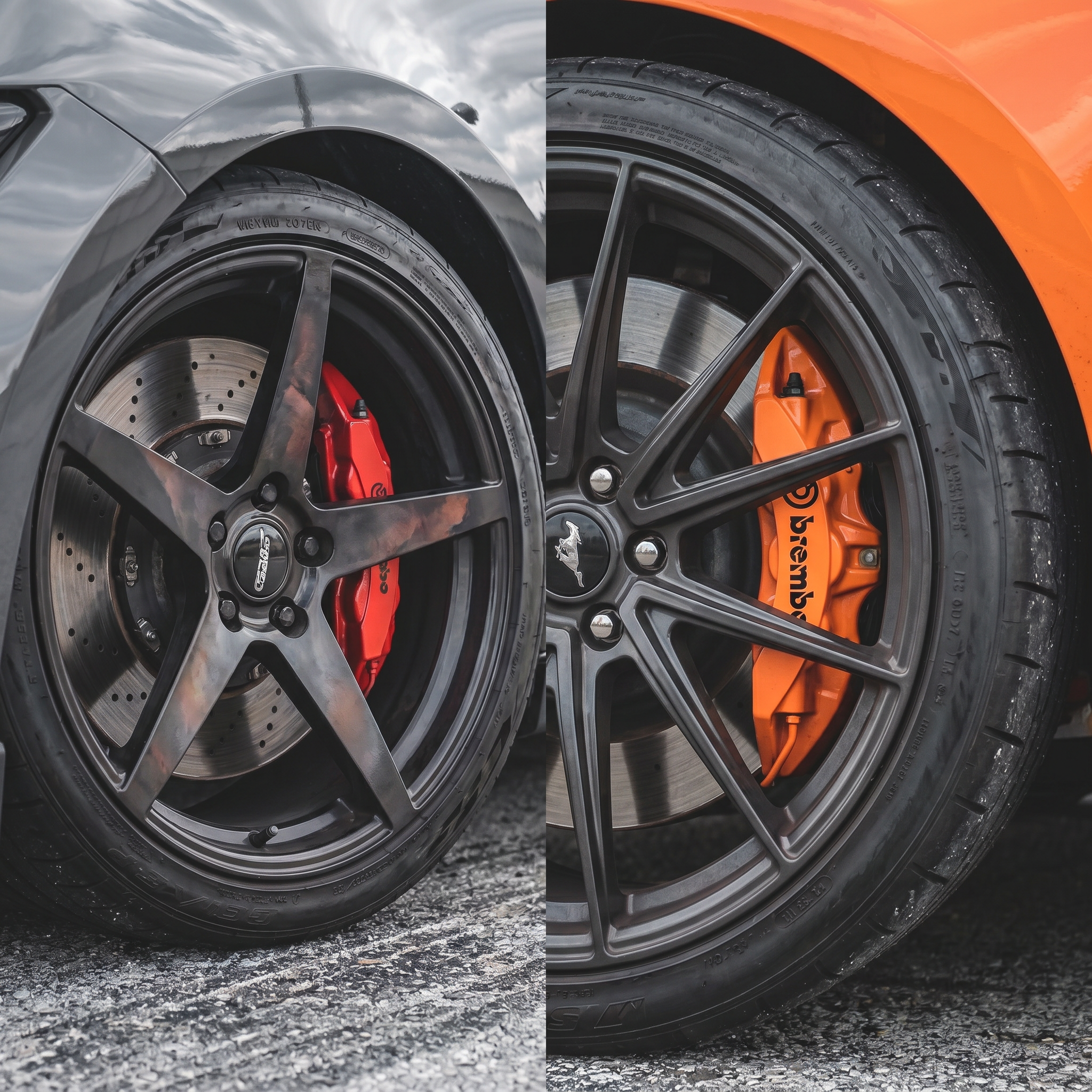
Your running budget doesn’t get decided at the dealership. It gets decided in tires and brakes, and it becomes obvious after two or three days of hard driving. In Mach 1 vs GT350R, both can be expensive if you use them as intended. They just spend money in different places depending on how hard you lean on them.
As a practical anchor, a track day often consumes more than people expect from a street car. Two tanks in a day isn’t rare if you run a lot. Tire wear can also accelerate fast if you go out with the wrong pressures or an alignment that’s set up for street use. No magic. Just heat and friction.
GT350R’s more aggressive orientation often nudges drivers into later braking and higher corner speed. That raises thermal load in pads, rotors, and fluid. Mach 1 can reach the same point when driven the same way, but many drivers hit that "trigger" a bit later because the car’s road manners encourage a slightly less pointy pace on public roads.
Wheels are another bill. Larger diameters and wider tires help stability, but they raise replacement cost and reduce options for more daily-friendly rubber. Pothole and curb damage risk goes up too. With low-profile tires, a marked wheel isn’t a story. It’s a repair or replacement.
Pad choice changes the experience. A street pad can work on fast roads, but it tends to fade sooner on track. A more aggressive pad stays consistent at higher temperature, but it can squeal, dust more, and eat rotors faster. That trade affects both cars. GT350R just pushes you into those decisions sooner.
- Mostly road use: prioritizing tires with good wet performance and reasonable wear reduces surprises.
- Mixed street and track: watching brake fluid condition and hose health helps avoid a long pedal after sessions.
- Frequent track use: planning tires and pads as fixed consumables prevents expensive last-minute fixes.
Reliability and maintenance: what to check before you trust the story
Reliability on these Mustangs doesn’t come down to one number. Use, heat, maintenance, and how the car was treated when nobody was watching all matter. In Mach 1 vs GT350R, the risks aren’t identical because the mechanical package and typical use profile aren’t identical either.
On GT350R, the Voodoo is part of the appeal and also the piece that demands more discipline. An engine that lives higher in the rev range and sees track use needs proper warm-up habits, fresh oil, and attention to consumption. A stamped service book helps, but it doesn’t tell the whole story. A car can have receipts and still have spent too many minutes being pushed hard before temps were right.
On Mach 1, the Coyote tends to be more familiar to shops and owners. That doesn’t make it invulnerable. But it does change the odds of finding hands that already know the maintenance pattern, the typical oil choices, and the symptoms worth taking seriously (odd noises, leaks, vibrations that don’t fit normal behavior). Parts availability and accumulated experience also tend to be better.
The manual gearbox deserves its own read. Clutch feel, shifter engagement, and any bearing or synchro noise tell you more than a short drive. With GT350R, intensive use can leave heat and hard-driving clues. With Mach 1, a well-maintained automatic can hide less day-to-day abuse, but you still want to check fluid service and hot behavior.
Before you buy, the inspection needs to cover mechanics and use. No drama needed. Just method.
- Check for leaks and seepage at the engine, differential, and cooling lines after a fully warm test drive.
- Look at inner tire wear as a clue for aggressive alignment or heavy track use.
- Inspect rotors for lips, cracking, and heat coloring. Ask about brake fluid if it’s seen track time.
- Watch for reversible mods and sloppy work: intakes, exhausts, tunes without documentation.
- Demand coherent paperwork: dates, mileage, and invoices that match the claimed use.
For a general used-car checklist, the Federal Trade Commission’s guidance is a solid baseline even if you’re buying outside the US. See the FTC’s used car buying guide.
Ownership economics and future value: why mileage "weighs" differently

These cars don’t behave the same way in the used market. It’s not only performance. Story and perceived rarity matter too. In Mach 1 vs GT350R, the GT350R often sits closer to collector-adjacent territory, and that changes how people talk about mileage, originality, and modifications.
A Mach 1 with reasonable mileage and clear maintenance tends to sell as a car to use. In that context, an exhaust or brake upgrade may not hurt as much if it’s done well and documented. On a GT350R, the average buyer often scrutinizes originality. A modification can raise doubts even if it improves performance. Many buyers are also buying a piece of Shelby history.
Prior use matters. A GT350R with documented track days isn’t automatically "bad," but it does require a buyer who understands consumables and inspections. A Mach 1 that’s lived on the road can be easier to place with a broader audience. That’s why the same mileage doesn’t get read the same way. On a more extreme car, 30,000 miles (48,000 km) can raise more questions than it would on a more generalist package.
Insurance and taxes vary widely by state or country, so fixed numbers don’t help. But patterns do. A car tied more to collectability can end up with specialty premiums or usage restrictions if it’s insured as a limited-mileage classic. A more "use it" car tends to fall into more conventional categories, even if it’s still a high-output V8.
Opportunity cost shows up too. Parking a GT350R to preserve value can reduce enjoyment if the whole point was to drive it hard. Using a Mach 1 frequently can make more sense if you want to rack up miles without feeling like every outing chips away at "historical" value. Neither stance is universal. Intent matters.
The real choice in Mach 1 vs GT350R: use, tolerance, and priorities
When you compare Mach 1 vs GT350R, the decision gets clearer if you think about your tolerance for daily friction. It’s not only about speed. It’s about how often you’ll use the car, what kind of trips you’ll do, and how much margin you want before hard use forces changes in habits, consumables, or prep.
Mach 1 fits well when you want strong performance without making every drive feel like an event. Its approach tends to live better with short trips, traffic, and weather swings. In that context, you can enjoy the car without waiting for everything to be "just right" to get into its window. That ease can also be a real-world speed advantage because you drive it more and plan less.
GT350R asks for a different mindset. It rewards planning and consistency: proper warm-ups, attention to tire condition, and driving that uses more of the rev range so the package makes sense. That effort isn’t a toll for someone chasing a very specific experience. But it does narrow the range of situations where the car feels natural.
A clear editorial stance helps avoid the wrong buy. If you want a Mustang you’ll use many days a month, with trips, errands, and varied driving, Mach 1 tends to align better with that reality. If you want a car that feels special even at the cost of comfort and flexibility, GT350R tends to deliver that intensity without needing justification.
A quick table to ground scenarios without picking a "winner"

| Situation | Mach 1 | GT350R |
|---|---|---|
| Frequent city and highway use | More margin for short trips and changing pace, less "ritual" before it feels good | Can feel more demanding when you can’t drive it the way it wants |
| Weekend runs on back roads | Fast pace without living at high rpm, easier to drive smoothly | More reward when you drive with intent, but rough pavement can wear you out |
| Repeated track days | Holds up well with preparation, but the owner often needs to manage temps and consumables closely | Built with track mindset, and the package tends to sustain focused use better |
| Buying for originality and value | Normal use and a well-documented upgrade can be acceptable | Originality tends to matter more, and many buyers want a cleaner history |
The table doesn’t replace a drive. It just organizes the conversation. In Mach 1 vs GT350R, the common mistake is assuming the more "special" car will always be more satisfying. Often it’s the opposite when real use doesn’t match the imagined use.
Who this comparison fits, and who it doesn’t
This Mach 1 vs GT350R comparison fits buyers who are close to buying used and need to translate feel and risk into decisions: how often they’ll drive it, how much preventive maintenance they’ll tolerate, and whether track time is real or just a nice idea. It also fits anyone who wants a fast Mustang and doesn’t want the decision to hinge only on headline numbers.
It won’t help someone who only wants a binary answer or a final ranking. It also won’t help if the plan is to buy without a serious inspection, without reading the history, and without accepting that two cars with the same badge can have totally different past lives. In that case, the issue isn’t Mach 1 vs GT350R. It’s buying blind.
Common questions

In Mach 1 vs GT350R, what changes most day to day?
The biggest day-to-day change is how much effort the car asks for to feel "in its element." One tends to work well in more situations. The other pays you back more when you can drive it with intent and space.
Does it make sense to compare Mach 1 with GT350R if you won’t track it?
Yes, but the comparison becomes about character and tolerance, not maximum capability. Without track time, noise, low-speed response, and how easy it is to enjoy on real trips matter more.
What should worry you more when buying: mileage or history?
History matters more. Moderate mileage with coherent invoices and signs of informed use is usually more reassuring than low miles with gaps, undocumented mods, or a story that doesn’t match the car.
Does the "R" mean it will always be more satisfying?
Not automatically. The "R" spec typically narrows the car toward a more specific use. That can be exactly what you want, or it can limit enjoyment if your driving is varied.
How do you avoid a bad buy in this comparison?
Get a pre-purchase inspection that includes a fully warm test drive and a consumables check, then read the prior use honestly. For a general checklist, the FTC’s used car buying guidance is a good starting point.
Three ideas worth keeping in mind
Mach 1 and GT350R don’t aim for the same day-to-day livability, even if performance overlaps.
The car you drive more days tends to be the one you feel best about long-term.
In Mach 1 vs GT350R, history and prior use matter as much as the engine.