
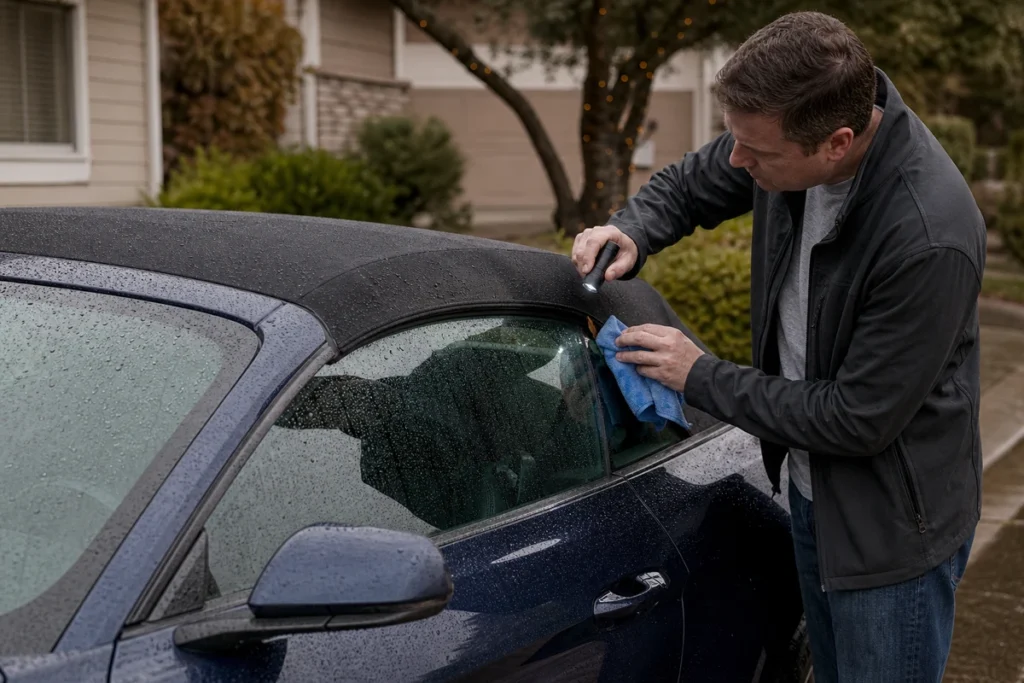
Rain has stopped, the Mustang is parked, and the roof still carries a skin of water. This is the wrong moment to treat the convertible-top switch as a quick test. First decide whether you are looking at normal surface moisture, a seal that needs attention, or water that has already reached the cabin.
Start with the top fully closed and the car stationary. Work from the outside in: fabric, seams, rear-glass edge, side-window seals, then the cabin. That order preserves the evidence. Cycling a wet roof can move water and debris into places that were dry a minute earlier.
Read the water before touching the switch
Look across the fabric in low, even light. Water beads spread across the panel are different from one dark track that begins at a seam or the rear glass. Do not press hard enough to deform the roof. Use a clean microfiber cloth only to blot one small area, then compare it with the surrounding material.
Follow the upper edge of each side window. Check whether the glass meets the rubber evenly from front to rear, and look for a folded lip, trapped leaf, grit or a seal that appears displaced. A small piece of debris can interrupt the contact line without proving that the roof itself is damaged.
Ford’s 2024 Mustang opening procedure says to clear the top surface and the stowage compartment before operation, and specifically warns that opening the top while the material is wet can lead to mold or mildew. That makes “wait until dry” a mechanical decision, not excessive caution.
Now inspect the cabin without disturbing trim. Feel the exposed carpet edge behind the front seats, look at the rear seating area and note any fogging or damp odor. Do not pull panels or probe drains with wire. If water is pooled, a headliner edge is saturated or an electrical warning appears, stop the inspection and arrange diagnosis before operating the roof.
A damp mark is useful evidence only while its exact position and the weather conditions are still clear. Photograph the location before wiping it away.
Keep cleaning separate from diagnosis
A wet top often looks dirty because droplets collect dust and pollen. Cleaning it immediately can erase the pattern you are trying to understand. Photograph the roof, seals and any interior moisture first. Record whether the car was parked level, which side faced the wind and whether the rain was steady or driven sideways.
When the top has dried, remove loose lint or debris gently. Do not attack one mark with a stiff brush or a household cleaner. Ford’s convertible-top cleaning guidance calls for a soft approach and warns that high-pressure water can cause leaks or seal damage. A pressure washer is therefore not a sensible way to “confirm” where water entered.
Keep the first cleaning pass broad and light rather than scrubbing a single seam. If a mark remains, use only a product and method appropriate to the top material and the exact model year. The purpose is to protect the fabric and preserve the seal shape, not to make the roof look dry for a photograph.
Do not add dressings, adhesive or sealant to a suspected leak path. Those changes can hide the original condition and complicate a professional water test. A clean photograph, the direction of the water trail and a note about the weather are more useful than an improvised repair.
Decide what happens before the next roof cycle
There are three practical outcomes. If moisture is limited to the exterior and the fabric is drying evenly, leave the roof closed until it is fully dry. If debris interrupted a seal but the seal is intact and the cabin stayed dry, remove the loose debris gently and document the area for the next rain. If water reached the cabin, a seal is loose, the rear-glass bond looks separated or the mechanism behaves differently, do not keep cycling the roof to reproduce the problem.
Only after the top is dry should you check normal operation. Park on level ground, clear the stowage area and keep hands and objects away from the linkage and window paths. Use the latch and switch in the order specified for the car. The Mustang closing instructions also explain that the vehicle should be stopped and the ignition left on while the top is moving.
Watch one complete cycle rather than running several in succession. The side glass should lower and return normally, the roof should approach the windshield header evenly, and the latch should secure without forcing it. A new hesitation, uneven movement, grinding sound or warning message is a reason to stop.
Finish by keeping a short record: date, weather, where the car was parked, the exact damp area and whether the cabin remained dry. If the problem returns, those details give a technician a repeatable starting point. If it does not, you have still avoided folding a wet top, blasting a seal with pressure or turning a simple inspection into a second problem.