
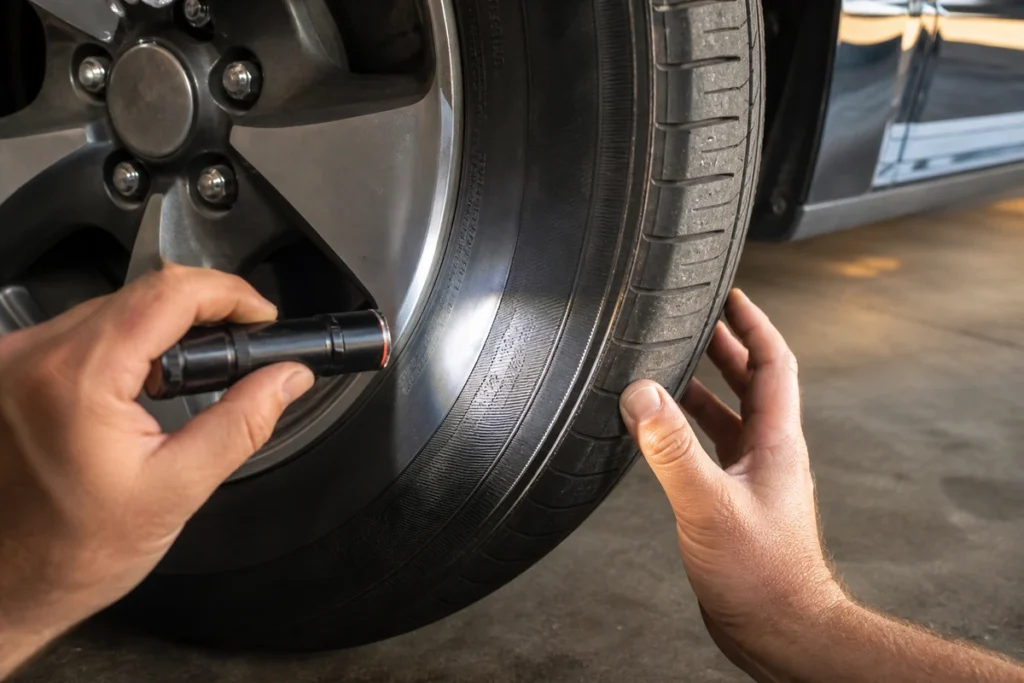
A tire can look clean, hold air, and still leave important questions unanswered. Before a long drive in a Mustang, spend a few minutes reading what is molded into the rubber and comparing it with the label on the car. The useful check is not a hunt for one magic number. It is a match between the tire, the wheel position, the vehicle label, and what the tire is doing today.
Ford’s 2025 Mustang tire-pressure guidance puts the recommended pressure on the driver-side B-pillar label and calls for a gauge check before long trips. That distinction matters: the maximum pressure molded into a sidewall is not the vehicle’s everyday pressure target.
The sidewall identifies the tire, not the setting
Start with the main size line. A marking such as 255/40R19 describes width, aspect ratio, radial construction, and wheel diameter. The service description that follows carries the load and speed ratings. Read the complete line on every corner instead of stopping after the first three digits. Some Mustang configurations are staggered, so a different front and rear size can be correct; an accidental mismatch can look similar from several feet away.
Compare those markings with the exact door label and the owner’s manual for the car’s year and configuration. Do not borrow a pressure or size from another Mustang, a forum photo, or a tire with a similar tread pattern. Wheel diameter, load rating, model year, and option package can change what belongs on the car.
Find the full date code on both sides
The DOT Tire Identification Number may not display its complete date portion on the outward-facing side. The NHTSA TireWise guide explains that the final four digits give the week and year of manufacture and advises checking both sidewalls. A code ending in 2322, for example, points to the twenty-third week of 2022; it is a production date, not an automatic expiration verdict.
Age is one part of the decision. Cracks, bulges, cuts, repeated pressure loss, vibration, or damage near the bead matter even when the date looks recent. If the complete code is on the inside and cannot be read safely with the car parked, leave that part for a tire professional. Do not crawl under a vehicle or rely on an unstable jack just to complete a visual check.
Read four corners as one set
Move around the car in the same order and photograph each size line and date code. Look for a lone tire with a different load index, speed symbol, construction, or model. A replacement does not have to share the same production week, but unexplained differences deserve a question before a trip. Also compare tread depth and wear pattern across each axle rather than judging one attractive outer shoulder.
Uneven wear can point to more than low pressure. A worn center, both shoulders, or one edge can reflect different combinations of inflation, alignment, suspension condition, load, and use. The sidewall cannot diagnose the cause. Its job is to tell you what tire is fitted; the wear pattern tells you what needs a closer inspection.
Pressure belongs to the car label
Check pressure when the tires are cold and use a reliable gauge. Record the four readings before adding or releasing air. Then work from the driver’s-door or B-pillar label for that exact car. If the current tires differ from the listed original size, do not guess a conversion from the maximum sidewall pressure. Confirm the correct specification with the relevant Ford documentation or a qualified tire shop.
A pressure-monitoring warning is a prompt to measure, not a substitute for the gauge. Likewise, a tire that looks round can still be significantly low. Replace the valve cap after the reading, listen for leakage at the valve, and note any corner that loses pressure again after adjustment. A repeating loss needs diagnosis rather than another top-up before every drive.
Leave with a record, not a memory
Keep the four sidewall photos, the door-label photo, and the cold pressure readings together. Add the date, outside temperature, and any symptom noticed at a particular speed or while braking. That short record lets a shop see whether the concern belongs to one tire, one axle, or the whole set without reconstructing the starting condition from memory.
If this check is part of evaluating a car you do not yet own, place it inside a broader used-Mustang inspection before the test drive. Tires can reveal neglected maintenance or an expensive near-term replacement, but they cannot prove the condition of the engine, brakes, structure, title, or recall status.
The practical result is a go, a question, or a stop. Matching size and ratings, stable cold pressure, sound rubber, and even wear support the trip. An unreadable or conflicting label calls for confirmation. A bulge, exposed material, rapid pressure loss, or new vibration calls for professional inspection before the car is asked to cover highway miles.