
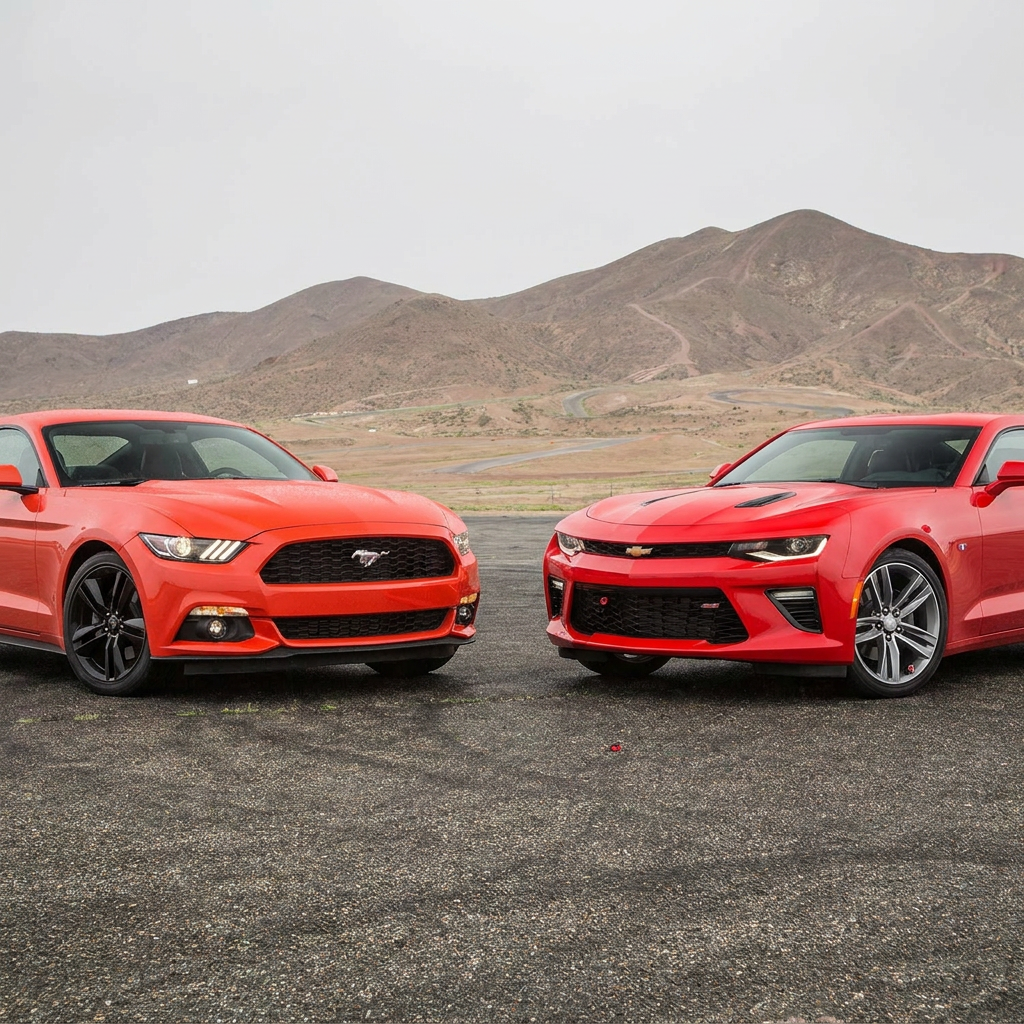
Mustang EcoBoost vs Camaro SS comes down to how you’ll use the car, what you’ll spend to run it, and whether you prefer turbo punch or V8 feel.
On paper, it can look like a simple "four-cylinder vs V8" argument. On the road, it’s more about how each car delivers speed, how easy it is to live with day to day, and what kind of ownership costs show up after the first few months.
Three quick ways to keep this comparison grounded:
- Match the generation and year range before judging performance or reliability.
- Separate straight-line shove from usable traction and braking confidence.
- Account for fuel, tires, and insurance as part of "performance per dollar."
Mustang EcoBoost vs Camaro SS: what matters most for a fair comparison
Choosing between these two isn’t about finding a universal "best." They follow different logic. The EcoBoost Mustang leans on turbocharged torque, lower curb-weight expectations, and a lower entry price in most markets. The Camaro SS leans on displacement, a broader torque curve without boost, and the character of a V8 as a core part of the experience.
For a fair comparison, start with three anchors: model year, transmission, and intended use. Comparing cars from similar eras helps, and mixing older and newer generations can skew impressions fast. Transmission choice changes the car more than many shoppers expect. Automatic and manual gearing can also make one car feel "short" or "long" in daily traffic.
Keep expectations realistic. A V8 SS has a power and sound advantage baked in. The EcoBoost’s appeal is that it can still be quick in real traffic, often with less fuel burn and a lighter nose feel. That difference drives many of the trade-offs discussed later.
Why this matchup is often misunderstood
Most confusion comes from people comparing badges instead of configurations. "Camaro" can mean anything from a base model to an SS or ZL1. "Mustang EcoBoost" can mean a basic car, a Performance Package car, or a higher-output variant depending on year and market. The result is a lot of cross-talk where one side is arguing against a trim that was never actually on the table.
Another common mistake is treating peak horsepower as the whole story. Turbo cars can feel strong in the midrange, then run out of breath at the top end depending on tune and heat. Large-displacement V8s often feel more linear and repeatable when driven hard for longer stretches. That shows up on hot days, on back roads, and during repeated pulls more than it does in a single "best run" anecdote.
Even tire and wheel choices warp impressions. A car on narrow all-seasons will spin, push, and brake poorly compared with the same car on wider summer tires. Many used cars are sold on whatever tires were cheapest at the time. That matters.
One more misunderstanding is weight distribution and visibility being treated as minor. They aren’t. A car that feels confident to place on the road gets driven more. A car that feels claustrophobic or hard to see out of can become tiring in daily use, even if it’s fast.
Setting the comparison frame: performance, costs, and livability
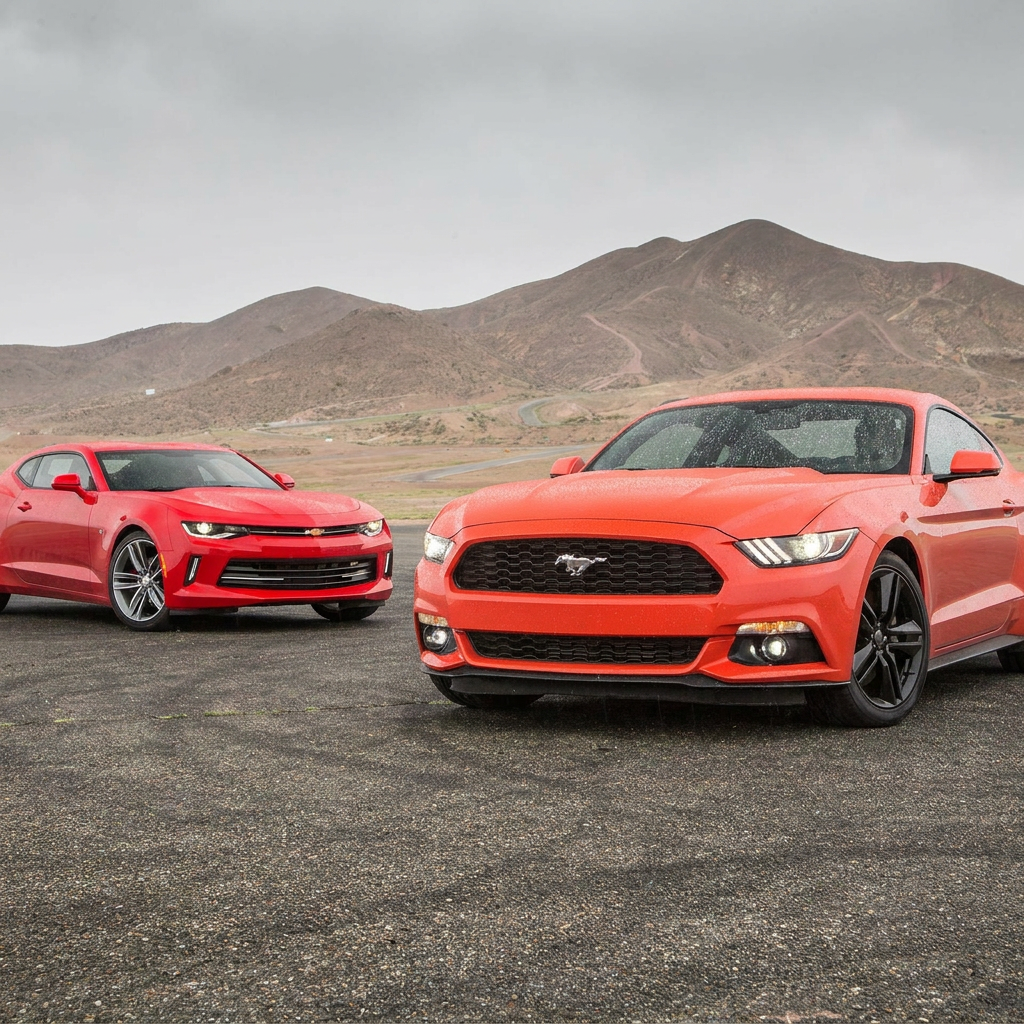
Before getting pulled into spec-sheet debates, it helps to define what "winning" would even mean for a specific driver. Straight-line acceleration is only one axis, and it’s not always the axis that determines satisfaction after a year of ownership.
For Mustang EcoBoost vs Camaro SS, the most useful frame is three buckets:
- Real-world performance feel: throttle response, traction at normal speeds, passing power from 30–70 mph, braking stability, and steering confidence.
- Cost to own: fuel grade habits, insurance pricing volatility for a V8 badge, tire wear rate, brake consumables, and common maintenance items.
- Livability: visibility, seat comfort, cabin ergonomics, rear-seat practicality, trunk opening shape, ride quality, and daily noise levels.
Each bucket changes with context. City commuters notice low-speed calibration and visibility. Highway drivers notice gearing and passing response. Weekend back-road drivers notice steering and brake temperature tolerance. Track use exposes cooling, pad choices, and repeatability.
A useful rule: if the car will spend 90% of its life in normal traffic, prioritize drivability and operating costs over one-time peak numbers. If it will be a weekend toy, character and repeatable performance rise in importance.
Two numeric anchors help keep expectations consistent across trims and years. The EcoBoost is typically a 2.3-liter turbocharged four-cylinder. The Camaro SS is typically a 6.2-liter V8. Those engine sizes aren’t just trivia. They predict how each car makes torque, how it responds to heat, and how it behaves when pushed repeatedly.
Fuel habits also matter in the monthly cost picture. Many performance-oriented setups (turbo or V8) deliver their best results on higher-octane fuel, and owners tend to build that into their routine. Treat it as part of the running-cost conversation, not a footnote.
For later sections, it also helps to keep a "used car reality" lens. A clean, stock example and a heavily modified example can feel like different cars. Modified doesn’t automatically mean bad. But it changes risk, maintenance needs, and how predictable the car will be.
One small but telling example of how ownership culture differs: cosmetic accessories tied to trim identity. A listing like "Metal Tire Valve Stem Cap Covers SS Emblem Air Valve Cap Set Dust Proof Leak-Proof Air Cover Compatible with Chevy Camaro SS Accessories (SS)" exists because SS branding is part of the Camaro’s appeal, even down to minor details.
How real-world performance changes between a turbo four and a V8
In Mustang EcoBoost vs Camaro SS, the difference isn’t only peak power. It’s how torque arrives and how consistent the car feels when you drive hard more than once. The EcoBoost’s turbocharged midrange can feel punchy, and it can also be more sensitive to heat and conditions when you keep leaning on it. The Camaro SS’s 6.2-liter V8 tends to build speed in a more linear, repeatable way.
On open road, the feel can change a lot in the 30–70 mph (about 48–113 km/h) window. A well-calibrated turbo can feel stronger than its displacement suggests because torque comes in early. But repeated pulls can separate the two. Heat management can soften a turbo car’s response, while the V8 often feels more consistent from one run to the next.
Traction matters too. The Camaro SS can have abundant torque and wider tire setups in performance-oriented configurations, but that doesn’t always make it easier. Road surface, tire temperature, and stability control tuning all play a role. The EcoBoost’s lower absolute torque can be easier to use at normal speeds if you want to drive briskly without constantly managing wheelspin.
Transmission choice changes perception. A multi-gear automatic can keep the engine in its useful band more of the time. A manual makes the engine’s character more obvious because you’re choosing the gear and the rpm. Drivers who like predictable response often notice the difference between turbo "waves" of torque and the V8’s more uniform push.
Brakes, tires, and suspension: where the difference shows up
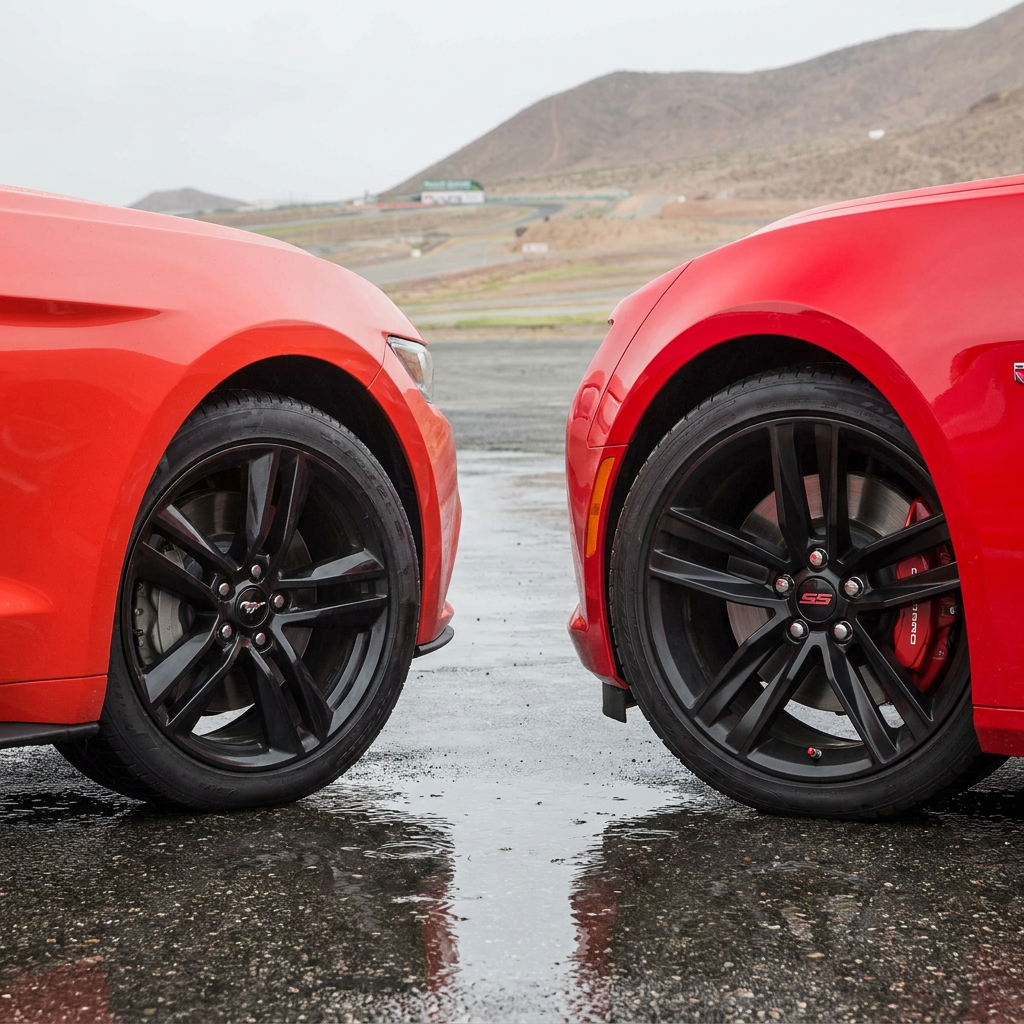
A lot of Mustang EcoBoost vs Camaro SS talk gets stuck on engines and exhaust notes. In real driving, brakes and tires often set the limits first. A car can have plenty of power and still feel tiring if the brake pedal changes after a few hard stops, or if the front end feels floaty over rough pavement.
Three variables matter quickly: tire compound and width, brake temperature, and suspension tuning. You don’t need track speeds to heat up street-focused pads on a twisty road. And the gap between summer tires and all-seasons isn’t subtle. It changes stopping distance, steering precision, and traction in a big way.
Used-car reality matters here. Plenty of cars for sale sit on budget tires, mismatched brands front-to-rear, or old rubber that’s hardened with age. In that situation, a Camaro SS can feel more nervous than it should, and an EcoBoost Mustang can feel calmer simply because it’s on fresher or more appropriate tires. Check brand, size, and date codes before trusting any test-drive impression.
Turn-in balance is another overlooked point. Front-end weight and geometry affect how willingly the car takes a set mid-corner. A lighter four-cylinder nose can feel more agile. A V8 adds mass and heat under the bonnet, and that can change response and consistency as temperatures rise. It’s not better or worse. It’s a different character.
Running costs that change the experience after 6–12 months
In practice, Mustang EcoBoost vs Camaro SS often becomes an economic decision after a few months of real use. Not only purchase price. It’s the repeat expenses. Over a 6–12 month window, differences in fuel, tires, brakes, and insurance tend to show up, even without "extreme" driving.
Fuel is the obvious example, but it’s worth reading it correctly. A 2.3 turbo can be efficient at steady speeds, then climb quickly when you’re often in boost. A 6.2 V8 can be straightforward and predictable, but city and mixed driving can push average consumption up fast. And in many markets, the V8 badge can influence insurance quotes and deductibles. You’ll feel that yearly.
Tires are the second multiplier. More torque and more mass can mean faster wear, especially at the rear. Alignment and driving habits matter a lot too. Hard launches, enthusiastic roundabouts, and ignoring pressures for months all add up. A performance tire can lose its "confidence" well before it’s bald, so the cost isn’t only when the tread hits the limit.
Brakes follow a similar logic. If your use includes mountain roads or frequent spirited driving, pads and rotors become more regular consumables. It’s not that one car "eats brakes" by default. Power invites harder braking, and speed turns heat into wear. Budget for it early if you want the car to stay consistent over time.
Use scenarios: where the daily choice changes

The same two cars can feel completely different depending on how you use them. To make Mustang EcoBoost vs Camaro SS easier to judge, it helps to think in scenarios instead of "car vs car" in the abstract.
| Scenario | Mustang EcoBoost | Camaro SS |
|---|---|---|
| Urban traffic and short trips | Strong midrange shove, often easier to enjoy without big speed | Immediate response, but torque can feel less relaxed in stop-and-go |
| Hilly, twisty roads | Lighter front feel and less perceived inertia in quick direction changes | Very strong corner exits, but needs more attention to traction and throttle |
| Motorway and long trips | Good steady-speed efficiency, effective passing when the turbo is on song | Power on tap without waiting, with more constant sound and character |
| Repeated hard use (heat, multiple pulls) | More sensitive to heat and conditions, can vary run to run | Often more consistent across repeats if tires and brakes are up to it |
Scenarios don’t replace a test drive. They make it more honest. If your real life is 90% commuting and 10% fun, low-speed usability and monthly cost can matter more than the "wow" moment. If you regularly drive open roads, repeatability and consumable durability start to matter more for long-term satisfaction.
Climate changes the story too. In very hot areas, turbo cars can feel more affected when the air is already hot and humid. In cold areas, traction and tire choice dominate, and V8 torque can be more demanding on cold tarmac. These cars don’t live in a vacuum. They live in a specific place, with a specific use.
Buying used: checks that actually change risk
In Mustang EcoBoost vs Camaro SS, buying used can shift the decision more than the engine choice itself. A well-kept example with traceable maintenance and coherent mods feels predictable. A tired or poorly modified car can make a platform feel "wrong" when it isn’t.
Before the test drive, paperwork matters. Look for invoices, consistent intervals, completed recalls, and a timeline that explains why the car changed hands. Usage matters too. A low-mile car with lots of hard driving can have more heat stress than a higher-mile car that lived on the motorway.
During inspection, some signals apply to both EcoBoost and SS. You don’t need a workshop lift. You do need time.
- Alignment and tire wear: sawtooth wear or chewed shoulders can point to alignment issues or aggressive use. Different wear left-to-right usually has a story.
- Repeated moderate braking: a pedal that changes feel after a few stops can signal neglected fluid or mismatched components.
- Temperature and cooling behaviour: after 15–20 minutes, watch for fluid smells, fans running constantly, or a noticeable drop in response.
- Transmission: hesitant shifts or harsh downshifts on an automatic deserve diagnosis; on a manual, a high clutch bite point, notchy engagement, or vibration under load can signal wear or modifications.
- Modifications: intake, exhaust, tuning, intercooler, pulleys, differential. Undocumented work isn’t automatically bad, but it adds uncertainty.
A practical note: in the sports coupe world, looks can hint at substance. Added badges and "meaner trim" details aren’t a problem on their own, but they should push you to verify that the car isn’t using appearance to distract from weak maintenance. For a concrete example of the kind of trim-identity accessory people buy, see Metal Tire Valve Stem Cap Covers SS Emblem Air Valve Cap Set Dust Proof Leak-Proof Air Cover Compatible With Chevy Camaro SS Accessories (SS).
When daily use decides more than power

Many people come to Mustang EcoBoost vs Camaro SS thinking they can live with any compromise because the car is a want, not a need. Then routine shows up. Tight parking, garage ramps, traffic, rough roads, long trips. In that world, the question isn’t "how fast is it." It’s "how often do I want to take it."
Visibility is a real divider. A car that needs constant seat-position adjustments, or makes city manoeuvres stressful, tends to get driven less. That matters because long-term satisfaction comes from frequency, not one perfect pull.
Ergonomics count too. Seating position, steering wheel, controls, sight lines at junctions, and motorway noise can separate "livable sporty" from "sporty but tiring." A V8 can be a constant pleasure for drivers who want character at every start-up. It can also become intrusive for someone who wants a quieter weekday experience.
Grip management is the most concrete daily factor. No track talk needed. Cold tarmac, damp roundabouts, gravelly ramps. Big, immediate torque asks for a disciplined right foot. A more easily metered delivery at normal speeds often leaves more margin, especially if the car is the only one in the household.
Who this choice fits, and who it doesn’t
Mustang EcoBoost vs Camaro SS makes sense for drivers who want a modern sports coupe and accept that the two cars deliver fun in different ways. It fits people who drive often, mix city and open roads, and want something entertaining without turning every outing into an expensive event. It also fits buyers considering light modifications who still want a manageable base over time.
It’s a poor fit for anyone chasing only one kind of experience with no compromises. If you only want the sound and always-on shove, a turbo four won’t scratch that itch. If you need an everyday car with minimal stress around visibility, fuel spend, and torque management, a V8 can be more demanding than it feels on a short test drive.
Common questions
In Mustang EcoBoost vs Camaro SS, does an automatic transmission really change the choice?
Yes. It changes how torque is delivered on the road and how often the engine stays in its useful band. A modern automatic can make both cars easier to drive, and it can also highlight differences in response and heat sensitivity.
How much do modifications matter on a used car compared with a stock example?
They matter most when they aren’t documented or don’t work together as a package. One well-done change is manageable. A long list with no proof of calibration and maintenance raises the odds of intermittent issues.
Is it realistic to expect similar running costs between a 2.3 turbo and a 6.2 V8?
No. Fuel, tires, and insurance tend to separate them even without extreme driving. It’s not only consumption. It’s how often consumables get pushed out of their comfort zone.
Does the "easier car" feeling come more from the engine or the chassis?
It comes from the combination. Tires, alignment, and suspension tuning can flip impressions, especially on a used car with cheap tires or an out-of-spec setup.
Three ideas worth remembering
Mustang EcoBoost vs Camaro SS isn’t a numbers contest. It’s a choice between two different ways of delivering speed and character.
A well-kept used example matters more than the spec sheet, because maintenance, tires, and modifications define the car you’re actually buying.
Daily visibility, routine driving, and repeat costs make the choice clearer than chasing a perfect run.